In this article (5 sections)
Every tool now has AI stamped on it. Every agency promises it. And most small brand owners are left wondering what any of it actually means for their business. This is a plain-language look at AI-powered marketing in 2026, what it really does, where it helps, and where it quietly costs you if you lean on it wrong.
What AI-Powered Marketing Actually Means
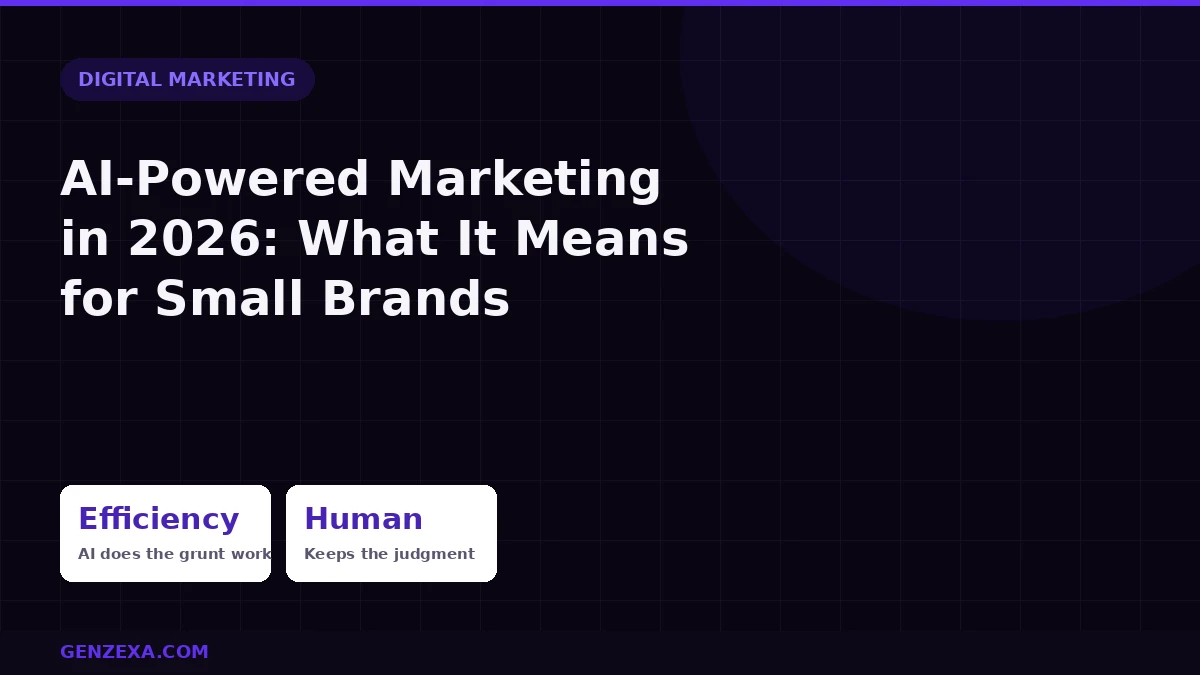
Strip away the hype and it comes down to this: using AI to do the parts of marketing that are repetitive, data-heavy, or slow, so the human parts get more attention, not less.
It's not a robot running your whole business. It's a tool that speeds up the grunt work and sharpens the decisions, while a person keeps hold of strategy, voice, and judgment.
Where AI Genuinely Helps
Content at speed
AI can produce drafts, headline variations, and ad copy options in minutes instead of hours. For a small team, that's the difference between testing three ideas and testing thirty.
Smarter ad targeting and bidding
Ad platforms now use AI to find buyers and adjust bids in real time. Used well, this stretches a small budget further than manual targeting ever could.
Personalization at scale
AI can tailor emails, offers, and product recommendations to individual behavior, so each customer feels spoken to directly, even when you have thousands of them.
Faster analysis
Instead of staring at dashboards, AI can surface what's working, what's leaking, and what to fix, so decisions happen in minutes.
Where AI Quietly Hurts
This is the part most guides skip, and it matters more than the upside.
- Generic content. Nearly a third of consumers are less comfortable with obviously AI-written brand content. If everything sounds like a machine, trust drops.
- Lost voice. AI defaults to bland. Without a human editing for your actual brand voice, you blend into the noise.
- Wrong decisions at speed. AI optimizes toward whatever you tell it to. Point it at the wrong metric and it'll waste budget faster than a human ever could.
The Rule That Keeps You Safe
Use AI for efficiency, keep humans for judgment. Let it draft, vary, and repurpose. Keep a person in charge of voice, strategy, and anything a customer will actually read or feel. The brands winning with AI in 2026 aren't the ones who handed everything over. They're the ones who used it to move faster while staying human where it counts.
Where to Start
Don't try to adopt everything at once. Pick one area where you're slow or stretched, content, ad testing, or email, and add AI there first. Measure the result. Then expand. Reactive trend-chasing burns money. Deliberate, measured adoption compounds.
At GenZexa, we help brands use AI where it actually moves revenue, without losing the human judgment that still separates brands people trust from brands people scroll past. Used right, it's a genuine edge. Used carelessly, it's an expensive way to sound like everyone else.
Reading about it is step one. We can do it for you.
Tell us what you sell and what's holding sales back. We'll tell you straight if we're the right people to fix it.
See how our services work →