In this article (5 sections)
Digital marketing today looks fundamentally different from what it looked like three years ago, and the pace of change is accelerating, not slowing. The brands thriving in this environment aren't the ones that adapted fastest to the last shift. They're the ones that built flexible systems designed to adapt to the next one. Here's what's coming and how to be ready for it.
Will Digital Marketing Replace Traditional Marketing?
Not completely, but for most brands, the budget allocation has already answered the question. Digital marketing's core advantage over traditional isn't reach. It's measurability. Every click, view, and conversion is traceable. Every dollar can be connected to an outcome. For performance-focused brands, this precision makes traditional channels increasingly difficult to justify at scale.
Traditional channels, broadcast TV, print, out-of-home, retain genuine value for mass brand awareness at scale. But for brands that need to connect marketing spend to revenue, digital continues to take a larger share of total investment because it can prove its value in a way traditional channels fundamentally cannot.
What AI Actually Means for Marketing Today
AI in marketing is both overhyped and underestimated simultaneously. It's overhyped as a replacement for strategic thinking, AI still requires humans to define objectives, interpret data in context, and make judgment calls about brand direction. It's underestimated as a force multiplier for execution speed.
Where AI is genuinely changing marketing right now:
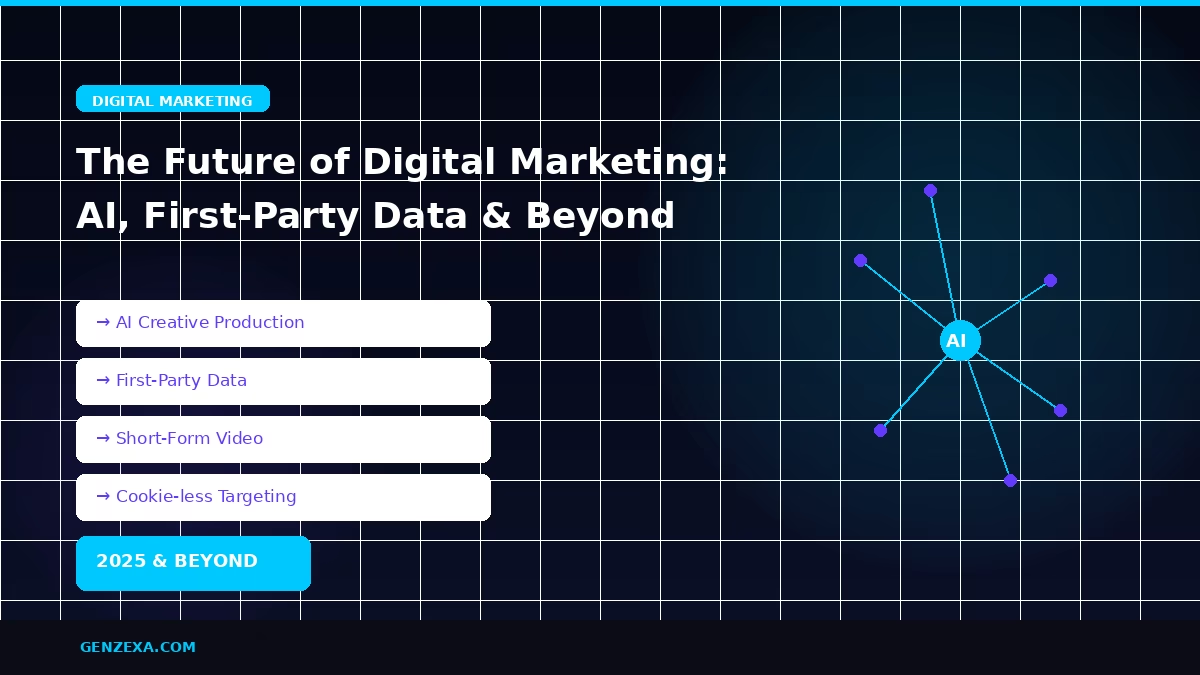
- Creative production: Ad copy variants, email subject line testing, landing page headline generation, processes that took hours now take minutes. More creative output means faster testing cycles means faster improvement
- Audience segmentation: Predictive audience models that identify high-value prospect patterns from first-party data more accurately than manual segmentation
- Campaign optimization: Automated bid management, budget allocation, and creative rotation that responds to real-time data faster than any human can
- Personalization at scale: Dynamic email content, personalized landing pages, and adaptive ad creative that adjusts to individual user behavior
The brands using AI as a force multiplier for human strategy will outcompete brands that treat it as either a threat or a complete solution. It's neither. It's a tool.
The Death of Third-Party Cookies: What It Actually Means
The deprecation of third-party cookies is not primarily a technical problem, it's a strategic wake-up call about data ownership. For years, brands rented audience data from platforms and data brokers. That rental agreement is ending. The brands that built their own first-party data infrastructure are positioned well. The brands that didn't are facing a significant competitive disadvantage.
Building a first-party data strategy today:
- Email list building: Every campaign should have a list-building component. Your email list is the only audience you truly own across every platform
- SMS list building: Even more direct than email. High open rates, zero algorithmic gatekeeping
- Loyalty and membership programs: Exchange ongoing value for ongoing data permission
- Zero-party data: Data customers willingly provide through quizzes, preference centers, and surveys. The highest quality data available, because the customer told you directly
- Server-side tracking: Move away from browser-based pixel tracking toward server-side event tracking for accuracy and privacy compliance
Short-Form Video Is No Longer Optional
TikTok, Instagram Reels, and YouTube Shorts now drive more top-of-funnel awareness than any other content format, at costs that are still relatively low before mass-market saturation. Brands that built short-form video capabilities early are seeing significant organic reach advantages that compound over time.
What works in short-form video for brand marketing:
- Native storytelling that doesn't feel like an ad, direct, casual, human
- Educational content that delivers genuine value in under 60 seconds
- Behind-the-scenes brand content that builds parasocial trust
- Problem-agitation hooks that make the audience feel understood in the first 3 seconds
The brands not yet investing in short-form video content aren't just missing awareness, they're ceding the most cost-effective brand-building channel of the current era to competitors who showed up earlier.
What Will Never Change
For all the platform shifts, algorithm changes, and technology evolutions, the fundamentals of effective marketing remain constant. Good copywriting that speaks to a specific person's specific problem. A clear offer that delivers unmistakable value. An understanding of the customer's journey that's deep enough to meet them where they actually are.
Every platform is new. Every format evolves. The psychology of human decision-making doesn't. The brands that build on timeless principles while adapting to new delivery mechanisms are the ones that compound their marketing advantage over time, regardless of what changes next.
Reading about it is step one. We can do it for you.
Tell us what you sell and what's holding sales back. We'll tell you straight if we're the right people to fix it.
See how our services work →