In this article (5 sections)
- Stage 1: Top-of-Funnel, Building an Awareness Engine That Compounds
- Stage 2: Mid-Funnel, The Nurture Matrix That Converts Attention Into Intent
- Stage 3: Bottom-of-Funnel, The Conversion Core
- Stage 4: Post-Purchase, The Retention Flywheel That Triples LTV
- The GenZexa Full-Funnel Growth Model: How It All Connects
The brands scaling 3–7× in revenue this year aren't outspending their competitors. They're outsmarting them. They're not running more ads, they're running a complete system where every piece amplifies every other piece. That's the difference between a marketing budget and a growth engine.
Most brands have a system problem disguised as a marketing problem. They run ads with no backend. They create content with no funnel. They capture leads with no nurturing. They chase monthly wins with no long-term compounding strategy. Here's what the system actually looks like when it's built right.
Stage 1: Top-of-Funnel, Building an Awareness Engine That Compounds
Today is the most competitive digital advertising environment in history. CPMs are at all-time highs. Consumers have seen every hook, every offer, and every tactic. Standing out requires more than a good ad, it requires becoming genuinely useful to your audience before they're ready to buy.
What the awareness engine looks like in practice:
- Educational micro-content: Short, high-density value videos that teach your audience something they didn't know, and associate your brand with expertise
- Story-led advertising: Narrative-driven ads that follow real people through real problems to real results. Stories outperform feature ads by 2–3× in CTR and watch time
- Frictionless lead magnets: Single-page PDFs, audit checklists, swipe files, or free tool access, the barrier to entry should be as low as possible
- Intent-driven SEO content: Not keyword stuffing, buyer-stage content that answers the exact questions your audience is searching for at each phase of their decision
The goal of TOF is omnipresence. You want your brand to be everywhere your prospect looks, before they ever start actively comparing solutions.
Stage 2: Mid-Funnel, The Nurture Matrix That Converts Attention Into Intent
Here's where most brands lose the game. Their TOF works. They get traffic and engagement. Then… nothing happens. No follow-up. No nurturing. No reason to come back. The prospect moves on, and the brand wonders why their ads aren't converting.
The mid-funnel is where revenue actually builds. It's the bridge between "I've heard of you" and "I'm ready to buy."
The Nurture Matrix has four coordinated layers:
- Email sequences: Segmented by lead source and behavior, delivering progressively deeper value with each touchpoint
- SMS follow-ups: High-impact moments, demo reminders, pricing page alerts, re-engagement triggers
- Retargeting ads: Social and display remarketing that reinforces the email narrative visually
- Content bridge pieces: Case studies, transformation stories, comparison guides, and objection-handling FAQs
The rule: 7–11 meaningful touchpoints before purchase. Most brands deliver one. The Nurture Matrix automates all eleven.
Stage 3: Bottom-of-Funnel, The Conversion Core
Your bottom-of-funnel is where intent becomes revenue, or evaporates. Prospects at this stage know what you do, trust you somewhat, and are actively weighing their decision. Your job is to remove every remaining reason not to buy.
The Conversion Core is built on three pillars:
Personalized Conversion Paths
A hot lead from LinkedIn needs different messaging than a cart abandoner from Google Shopping. A returning visitor needs different friction removal than a first-time visitor. Dynamic landing pages and smart segmentation serve each prospect what they need to convert, not a generic page.
Social Proof Stacking
Proof doesn't just support claims, it reduces perceived risk. Stack it in layers: customer testimonials, case study data, third-party reviews, press mentions, and trust badges. The more specific the proof, the harder it works.
Conversion-Optimized Pages
- Benefit-led headline that speaks to the exact outcome they want
- Single primary CTA, no competing paths
- Objection-handling copy embedded within the page flow
- Exit-intent triggers for high-value prospects
Stage 4: Post-Purchase, The Retention Flywheel That Triples LTV
The most expensive customer you'll ever acquire is a new one. Yet most brands pour 95% of their marketing budget into acquisition and almost nothing into retention. This is one of the most costly strategic errors in growth marketing.
Post-purchase marketing is where 7-figure brands separate themselves from 6-figure ones.
The Retention Flywheel components:
- 30-day onboarding journey: Keep new customers engaged, educated, and successful immediately after purchase, before buyer's remorse can set in
- Loyalty mechanics: Points systems, referral incentives, early access drops, VIP tiers, designed to make buying again feel like a reward
- Community building: Private groups, events, ambassador programs, brands with a community around their product have a moat that competitors cannot copy
- Win-back campaigns: Automated re-engagement for lapsed customers at 30, 60, and 90-day intervals
Every percentage point increase in repeat purchase rate multiplies your ROAS across every acquisition channel. Retention doesn't just save money, it makes your entire growth system more profitable.
The GenZexa Full-Funnel Growth Model: How It All Connects
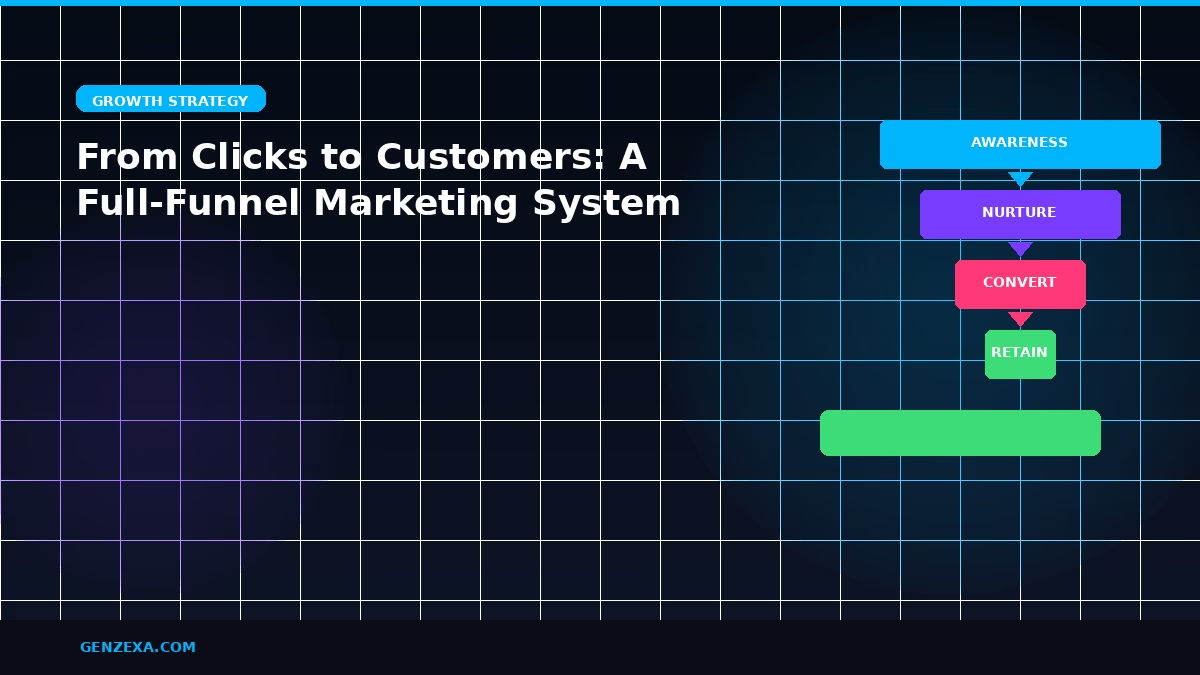
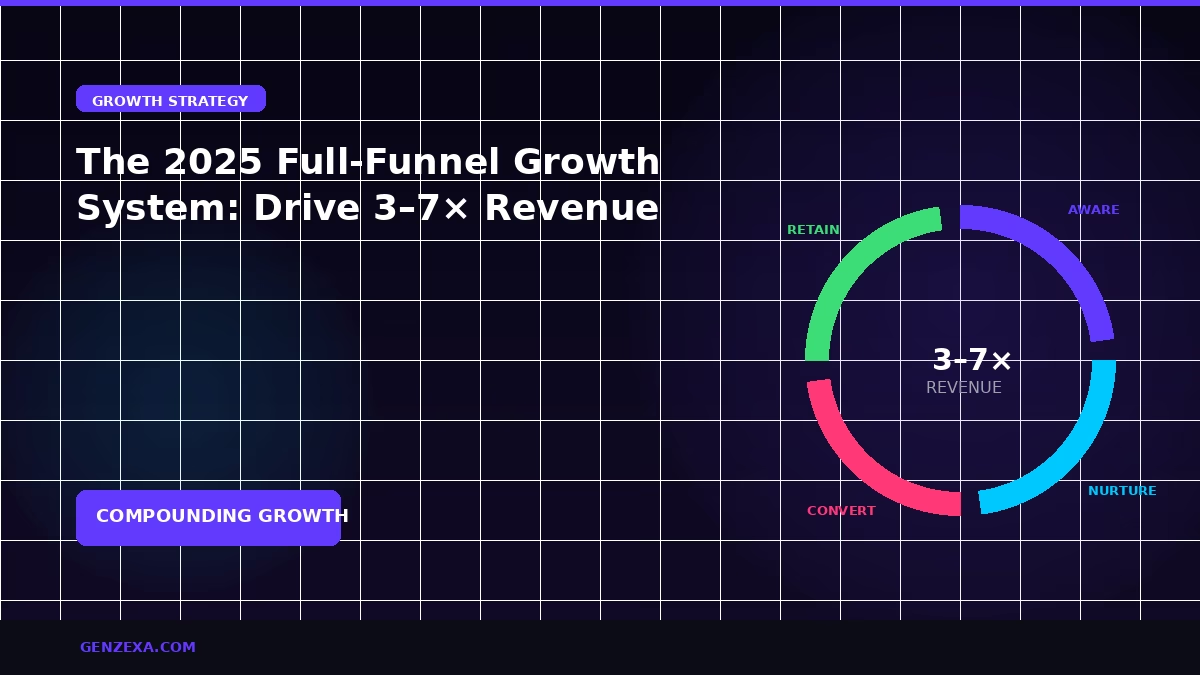
- Awareness Engine → Builds brand omnipresence across multiple channels simultaneously
- Nurture Matrix → Automates 7–11 touchpoints that move every lead from awareness to intent
- Conversion Core → Optimized pages and offers that convert intent into revenue efficiently
- Retention Flywheel → Systems that turn one-time buyers into repeat customers and brand advocates
What makes this system exceptional isn't any individual component, it's the compounding effect of all four working together. Each stage feeds the next. Each customer who enters the flywheel makes the entire system more profitable than it was before they arrived.
The brands that win today aren't the ones with the biggest budgets. They're the ones with the most complete systems.
Reading about it is step one. We can do it for you.
Tell us what you sell and what's holding sales back. We'll tell you straight if we're the right people to fix it.
See how our services work →
First-Party Data in 2026: Why Owning Your Customer Data Is Now a Competitive Edge
6 min read
Hyper-Personalization in 2026: Why Retention Is the Real Growth Engine
7 min read