In this article (5 sections)
A website is the single most important digital asset your business owns, and most businesses have one that costs them far more revenue than it generates. Not because they made the wrong aesthetic choices, but because they optimized for looks instead of performance. This guide is about building a website that works as hard as you do.
Understanding What Your Website Actually Needs to Do
Before choosing a platform or hiring a developer, get clear on what your website must accomplish. Different business types have fundamentally different website requirements:
- eCommerce store: Product discovery, trust building, and frictionless purchase conversion
- SaaS product: Problem communication, feature education, trial sign-up, and onboarding entry
- Service business: Credibility establishment, offer clarity, and lead capture
- Content/media site: Search ranking, engagement, and audience retention
Every design decision, technology choice, and content decision should serve these primary objectives, not the preferences of the developer or the trends on Dribbble.
Choosing the Right Technology Stack
The right platform depends on your business model, technical resources, and scale trajectory, not what's most popular or most impressive-sounding.
eCommerce:
- Shopify: Best for brands under $1M/year. Low technical overhead, excellent ecosystem, strong conversion-focused theme options. Most eCommerce brands should start here
- Shopify Plus: For brands over $1M with complex needs, custom checkout, B2B features, or high-volume automation requirements
- Headless commerce (Next.js + Shopify or similar): Maximum performance and flexibility, but requires significant development investment. Justified above $5M revenue
- WooCommerce: Good for brands already heavily invested in WordPress. Higher maintenance overhead than Shopify
SaaS and Web Applications:
- Marketing site: Webflow (fastest to build, no developer required) or Next.js (developer-built, maximum performance)
- Product application: React or Vue frontend with Node.js, Python (Django/FastAPI), or Ruby on Rails backend depending on team expertise
Service businesses and agencies:
- WordPress + Elementor or Divi: Good balance of flexibility and ease for content-heavy sites
- Webflow: Superior design control and performance compared to WordPress for primarily visual sites
The 7 Factors That Determine Whether Your Website Converts
1. Page Speed, Under 3 Seconds on Mobile
Google's data is clear: 53% of mobile users abandon a page that takes longer than 3 seconds to load. Every additional second costs approximately 7% in conversions. Speed is not a technical nice-to-have, it's a direct revenue lever. Test your site at PageSpeed Insights (free) and target a score above 80 on mobile.
2. Clear Value Proposition Above the Fold
The first thing a visitor sees should answer: "What is this, why does it matter to me, and what should I do next?" in under 5 seconds. If your hero section leads with a brand tagline that requires context to understand, you're losing visitors before they've even started reading.
3. Mobile-First Design
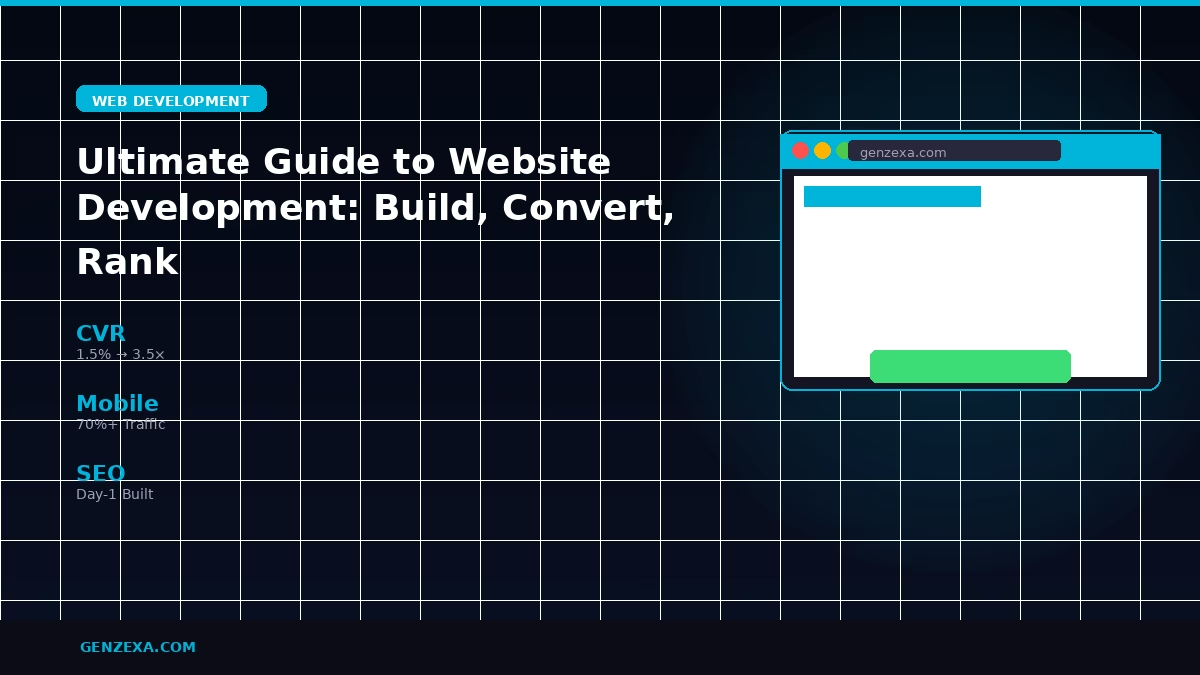
Today, designing for desktop first is designing for the minority. Build for mobile. Then adapt for tablet and desktop. Not the other way around. Over 70% of web traffic across most industries is mobile, your design should reflect that reality.
4. Strategic Social Proof Placement
Trust signals should appear before the visitor needs to make any decision. That means above the fold on the homepage and product pages, immediately adjacent to CTAs, and throughout the checkout flow. Don't make visitors scroll to find reasons to trust you.
5. Navigation Simplicity
More navigation options create decision paralysis. Limit primary navigation to 5–7 items maximum. Every additional choice creates cognitive load that reduces the likelihood of completing any action. When in doubt, remove rather than add.
6. Strong, Singular Calls-to-Action
Each page should have one primary action you want visitors to take. Multiple competing CTAs on the same page reduce conversion rates because they force visitors to choose, and a confused visitor almost always chooses to leave.
7. Accessible, Readable Typography
Body text minimum 16px. Line height 1.5–1.7. Strong contrast ratio (4.5:1 minimum per WCAG standards). Good typography isn't about aesthetics, it's about whether people can actually read your content without effort. Effort = friction = lost conversions.
SEO Architecture: Build It In From Day One
The most expensive SEO mistake is treating it as an afterthought, something you add to a finished website. SEO built into the architecture from the start delivers dramatically better results than SEO patched on afterward.
SEO architecture fundamentals:
- URL structure: Clean, descriptive, keyword-relevant URLs (yoursite.com/product-category/product-name, not yoursite.com/p/12847)
- Site architecture: Flat hierarchy where important pages are accessible within 3 clicks from the homepage
- Schema markup: Structured data that helps Google understand what your content is, product schema, review schema, FAQ schema depending on page type
- Core Web Vitals: LCP, FID, and CLS scores, Google's user experience metrics now directly influence search rankings
- Meta tags: Unique, compelling title tags (55–60 characters) and meta descriptions (150–160 characters) for every indexable page
- Internal linking: Strategic connections between related pages that distribute link equity and guide crawlers through your site
The Ongoing Optimization Mindset
A website is never finished. Every month should include at least one A/B test, one page speed optimization review, and one conversion rate analysis. The brands with the best websites in their category aren't the ones who built the best initial version, they're the ones who iterated the most relentlessly after launch.
Build for performance. Optimize for conversion. Design for your customer, not for yourself. That's what separates a website that generates revenue from one that just occupies a domain name.
Reading about it is step one. We can do it for you.
Tell us what you sell and what's holding sales back. We'll tell you straight if we're the right people to fix it.
See how our services work →