In this article (5 sections)
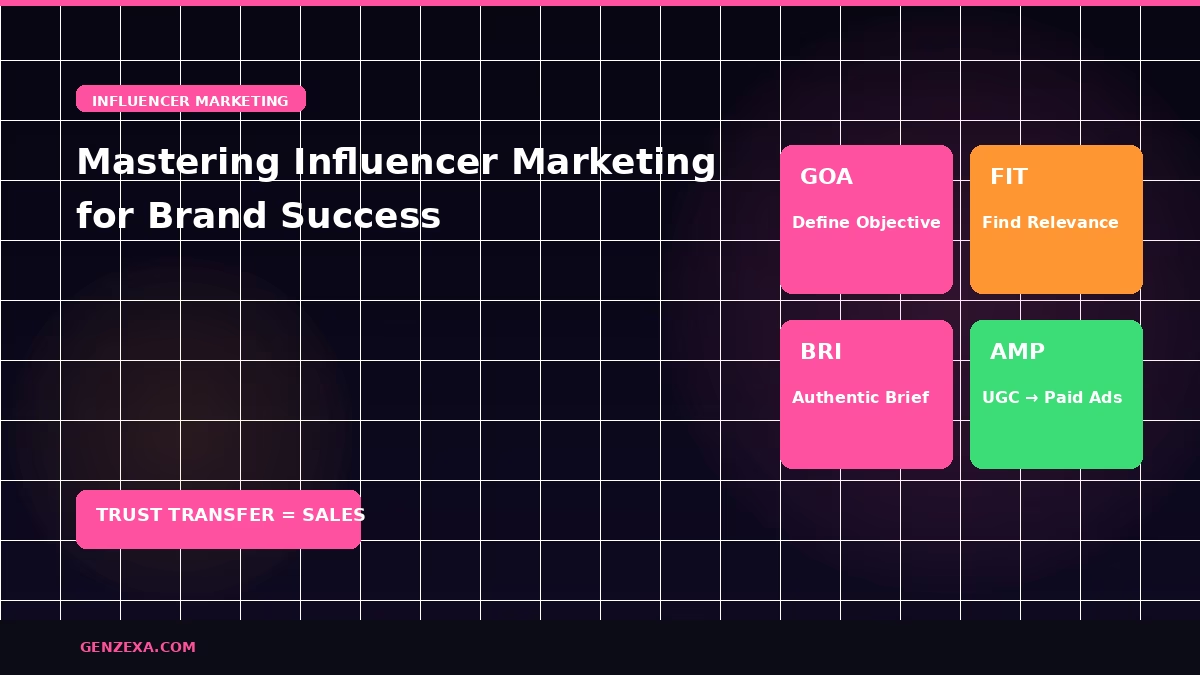
The reason influencer marketing outperforms traditional advertising isn't reach or budget, it's trust transfer. When someone you follow and respect recommends a product, the trust they've built with you transfers to that product recommendation. It doesn't feel like an ad. It feels like advice. And people act on advice in a way they've stopped acting on ads.
Mastering influencer marketing means understanding this mechanism deeply, and building a strategy around it rather than around vanity metrics.
Why Influencer Marketing Works at a Psychological Level
Traditional advertising interrupts. It appears between content the audience actually wants. The audience endures it, ignores it, or actively avoids it.
Influencer content is the content the audience wants. When an influencer they chose to follow mentions a product they love, the audience experiences something entirely different: discovery. It feels organic because it often is. That feeling drives purchase intent in a way that no interruptive ad format can replicate.
Advertising tells people what to buy. Influence makes them want to buy it themselves. The difference in conversion rates reflects this completely.
Step 1: Define Your Goal Before You Define Your Influencer
The most common influencer marketing mistake is finding influencers first and strategy second. Your goal determines everything, the tier of influencer, the content format, the platform, the success metrics, and the budget allocation.
Match your goal to your approach:
- Brand awareness: Macro influencers on YouTube or Instagram. Measure reach and brand search lift
- Direct sales: Micro influencers with high engagement and niche relevance. Measure revenue via unique codes and UTMs
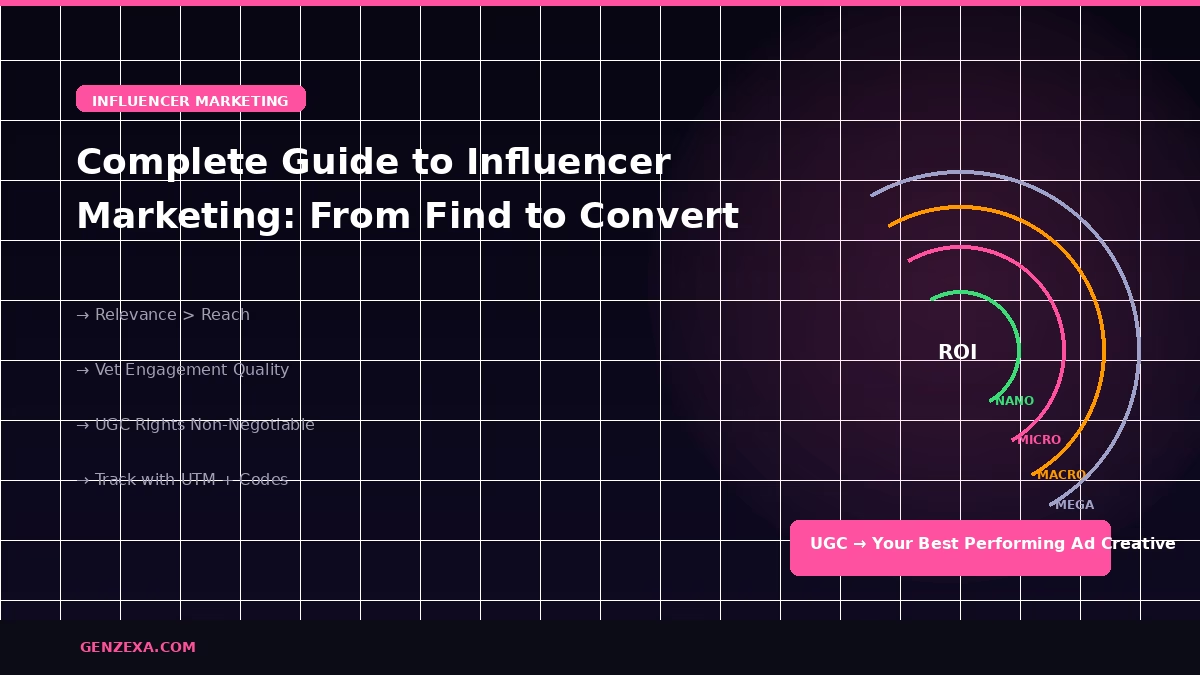
- UGC content generation: Nano and micro creators who produce high-quality authentic content. Secure full usage rights. Measure content performance in paid campaigns
- Community building: Niche micro-influencers who are respected voices in a specific community. Measure engagement quality and brand sentiment shift
- App downloads or SaaS signups: Platform-specific creators (YouTube for in-depth reviews, TikTok for reach). Measure installs or trial signups per creator
Step 2: Find Influencers by Relevance, Not Reach
Relevance beats reach in every performance category. A 15,000-follower creator who is the most trusted voice in your product niche will outperform a 1.5M-follower generalist virtually every time, at a fraction of the cost.
How to evaluate relevance:
- Does their content aesthetic align with your brand's visual identity?
- Do their followers match your ICP by age, interest, and geographic market?
- Have they previously engaged authentically with products similar to yours?
- Is their existing content quality something you'd be proud to have associated with your brand?
- Do they post consistently enough to have an active, engaged community?
Step 3: Brief for Authenticity, Not Compliance
The brands that get the best influencer content are the ones that hire a creator for their perspective, then give them the latitude to express it genuinely.
What your brief should include:
- Brand background and the problem your product solves (2–3 sentences max)
- Key message you want communicated, the one thing viewers should remember
- Hard requirements: required disclosures, things that cannot be said, product claims that must be accurate
- Soft guidelines: preferred tone, content style examples from posts you admire
- Creative freedom statement: explicitly invite the creator to interpret the brief in their own voice
The brief protects the brand. The creative freedom protects the authenticity. Both are necessary. Neither alone is sufficient.
Step 4: Repurpose the Best Content Into Your Highest-Performing Ads
Influencer content doesn't end when the post goes live. The best-performing brands treat creator content as a content production pipeline, raw material for their most effective paid advertising.
The UGC repurposing playbook:
- Identify the top 20% of influencer content by engagement rate and organic conversion
- Run it as paid dark posts on the platform where it was created (native content performs natively)
- Test UGC creative against brand-produced creative in every ad campaign, UGC wins 60–70% of the time
- Build a UGC library that refreshes quarterly through ongoing influencer partnerships
The brands that master influencer marketing don't just run campaigns, they build an ever-growing content library of authentic, audience-validated creative that makes every other marketing channel perform better.
Reading about it is step one. We can do it for you.
Tell us what you sell and what's holding sales back. We'll tell you straight if we're the right people to fix it.
See how our services work →