In this article (6 sections)
Influencer marketing gets a bad reputation from brands that do it wrong, chasing follower counts instead of genuine influence, paying for impressions instead of buying trust, and measuring success in likes instead of revenue. Done right, it's one of the most cost-efficient customer acquisition strategies available. This guide covers everything you need to execute it correctly.
Understanding the Influencer Landscape
The influencer ecosystem is not one market, it's four distinct markets with completely different economics, audiences, and expectations. Choosing the wrong tier for your objective is one of the most common and costly influencer marketing mistakes.
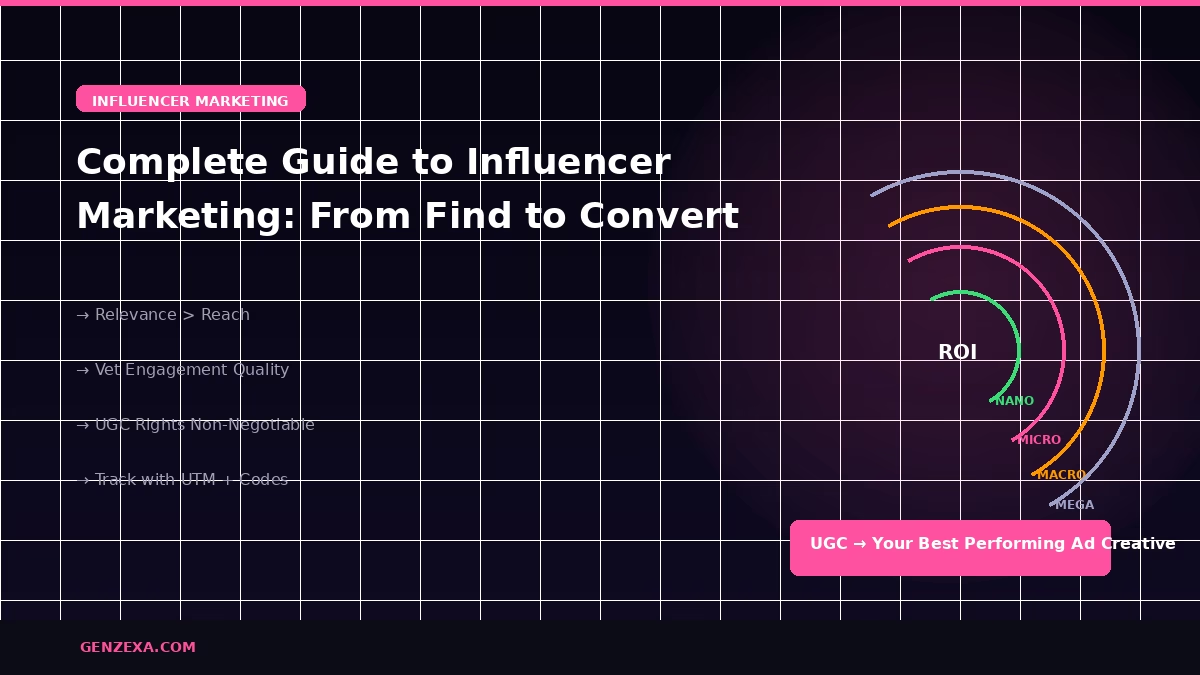
The four tiers:
- Nano Influencers (1K–10K followers): Highest engagement rates (often 5–10%). Deeply trusted by a very specific community. Ideal for products where personal recommendation is the primary conversion driver. Very cost-effective, often willing to work for product gifting
- Micro Influencers (10K–100K followers): Strong niche authority with meaningful engagement (2–5%). The sweet spot for most eCommerce brands. Authentic enough to convert. Accessible enough to be affordable at scale
- Macro Influencers (100K–1M followers): Broad reach, lower engagement rate (0.5–2%). Better for brand awareness campaigns than direct conversion. Higher cost requires higher certainty about audience alignment
- Mega/Celebrity Influencers (1M+): Massive reach, very low engagement rate, very high cost. Only justified for brand-building campaigns with major budget, not for performance-focused campaigns measuring ROAS
For most eCommerce brands today, a portfolio of 10–20 micro-influencers will consistently outperform one mega-influencer at the same budget, in both conversion rate and content quality.
How to Find the Right Influencers
Where to search:
- Instagram and TikTok search: Use relevant hashtags and "explore" to find creators already producing content in your category
- Influencer marketplaces: Platforms like AspireIQ, Grin, and Creator.co let you filter by niche, follower count, engagement rate, and audience demographics
- Your own customers: Check who's already tagging your brand organically, these people are your most authentic advocates and often have relevant audiences
- Competitor analysis: Look at who's creating content for competitors in your category. If their audience responds well to your category, they're likely a good fit for your brand
What to look for beyond follower count:
- Content quality and aesthetic, does it align with your brand's visual identity?
- Comment quality, are comments genuine conversations or generic spam?
- Posting frequency and consistency, do they maintain a regular content cadence?
- Previous brand partnerships, have they worked with relevant, non-competing brands?
- Audience geography, are their followers in your target markets?
Vetting Influencers: The Metrics That Actually Matter
Every influencer will present their best numbers. Your job is to verify independently before committing budget.
The vetting checklist:
- Engagement rate: (Total likes + comments) ÷ followers. Target: 2% minimum for macro, 4%+ for micro and nano. Calculate this manually on their last 12 posts, not from their media kit
- Comment quality audit: Read 20–30 comments. Genuine engagement looks like specific responses to the content. Fake engagement looks like "Great post!" "Love this!" from accounts with no profile photos
- Follower growth chart: Use HypeAuditor or Similar Web to see follower growth over time. Sudden spikes followed by plateaus indicate purchased followers
- Audience demographics: Ask for an Instagram Insights screenshot or use a third-party tool. Confirm age range, gender split, and geographic concentration align with your ICP
- Story view rate: Story views ÷ followers should be 5–15% for a healthy, engaged account. Unusually low story views despite high post engagement often signals an inflated follower count
Structuring the Partnership and Brief
What the contract must include:
- Deliverable specifications: exact number of posts, stories, reels, and timelines
- Content approval rights: one round of feedback before posting
- Full UGC rights: perpetual license to use content across all paid and organic channels, this is non-negotiable and one of the most valuable assets from any campaign
- FTC disclosure requirements: all sponsored content must be clearly disclosed
- Exclusivity clause: time-limited exclusivity preventing collaboration with direct competitors
- Performance metrics: define what success looks like and how it's measured
How to brief for authentic content:
Over-scripted influencer content loses the single quality that makes influencer marketing work: authenticity. Provide clear brand guidelines and key messages, then give the creator genuine creative freedom in how they communicate them. The audience can tell the difference between an influencer speaking genuinely and an influencer reading a script. One converts. The other doesn't.
Measuring ROI the Right Way
Impressions and reach are vanity metrics for influencer campaigns. These are the measurement tools that tell you whether a partnership is actually generating revenue:
- Unique discount codes: Each influencer gets a unique code. Revenue attributed directly and unambiguously
- UTM-tagged links: Track website traffic, sessions, and conversions per influencer in Google Analytics
- Affiliate tracking platforms: Tools like Impact or ShareASale automate tracking and commission payments at scale
- Post-campaign revenue analysis: Compare revenue in the 7 days before vs. 7 days after each influencer post, accounting for organic lift beyond tracked clicks
The Hidden Value: UGC as Your Best Performing Ad Creative
Here's the return most brands completely miss from influencer campaigns: the content itself. Authentic UGC consistently outperforms brand-produced ad creative in paid campaigns, often by 30–50% in CTR. A $500 micro-influencer partnership that generates three high-quality videos could deliver $5,000 in performance value when those videos run as paid ads.
Always secure perpetual UGC rights before any campaign. Then run the best-performing content as paid ads. This single strategy can make influencer marketing one of your highest-ROAS acquisition channels.
Reading about it is step one. We can do it for you.
Tell us what you sell and what's holding sales back. We'll tell you straight if we're the right people to fix it.
See how our services work →